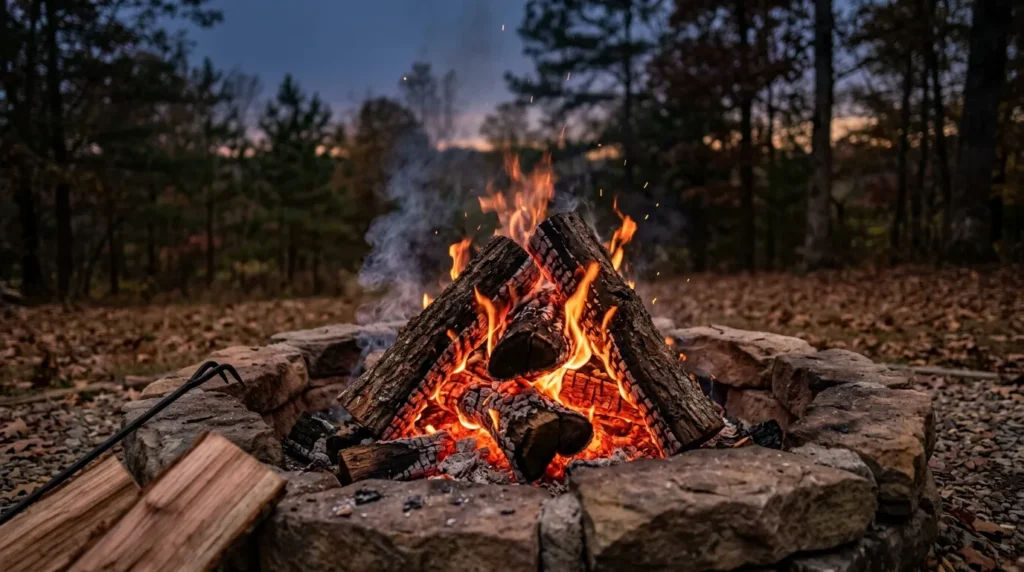
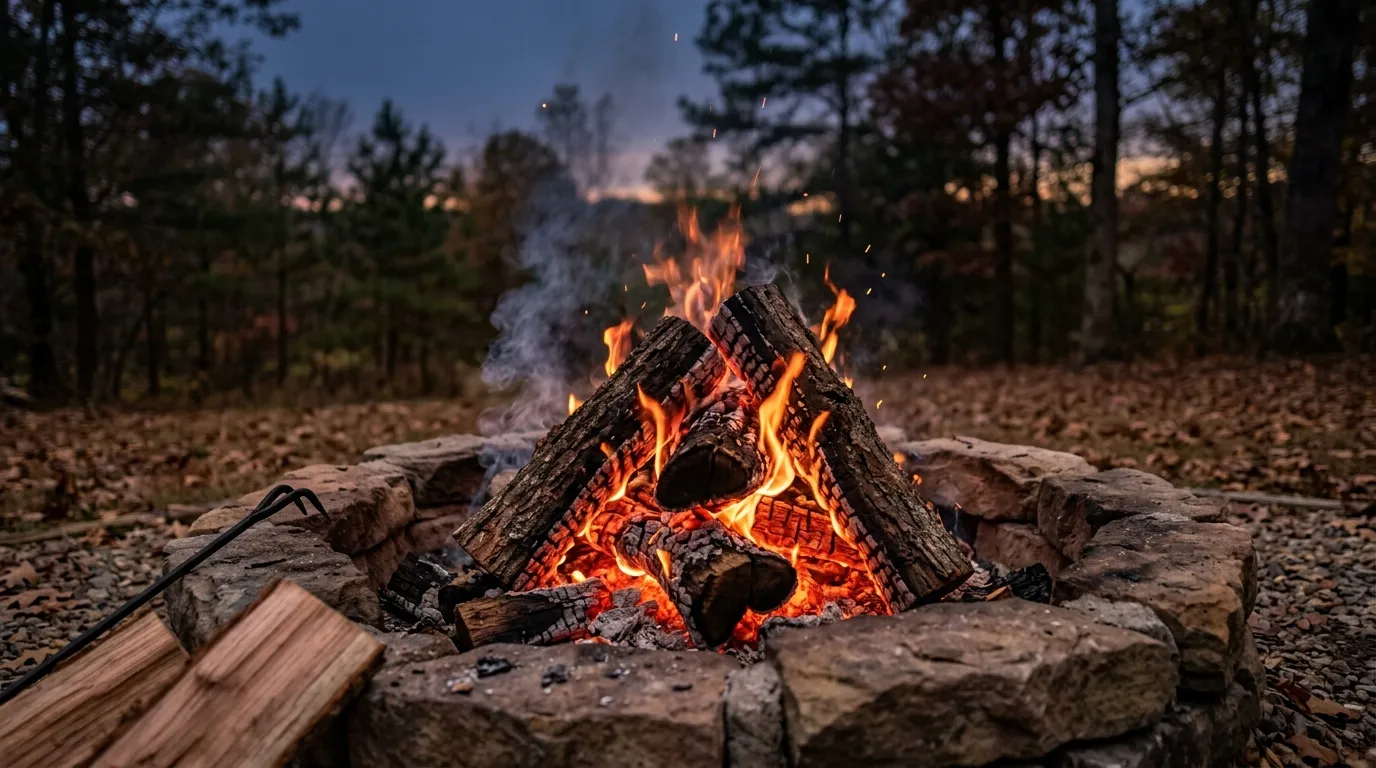
Hearing firewood pop while it burns is common. Sometimes you hear a small crack, while other times a log can make a loud pop and send sparks into the air.
But why does this happen?
The main reason is heat. As a log gets hot, moisture, sap, gases, and air trapped inside the wood can expand. This creates pressure inside the log. When that pressure finds a weak spot, the wood can crack or split, causing the popping sound.
Here are 10 common reasons why firewood pops while burning.
1. Moisture Inside the Wood
One of the main reasons firewood pops is moisture. Even wood that looks dry can still contain some water inside.
When the log heats up, the water turns into steam. Steam takes up more space than liquid water, so pressure can build inside the wood. If the pressure becomes high enough, the wood may crack and make a popping sound.
2. Steam Builds Up Inside the Log
Steam can become trapped inside small spaces within the wood. As the fire gets hotter, this steam expands.
The pressure can eventually force its way through the wood. When the wood suddenly splits, you may hear a sharp pop.
This is one reason damp firewood can make more noise than properly dried wood.
3. Trapped Gases Expand
Wood contains small spaces where gases can become trapped. When the log gets hot, these gases expand.
If they cannot escape slowly, pressure can build up. The pressure may cause a small crack or opening, which can produce a popping sound.
4. Natural Cracks Open
Firewood often has small cracks, especially around the ends of the logs. These cracks can become wider as the wood heats up.
When the heat reaches a weak area, the crack may suddenly open. This can create a loud cracking or popping sound.
5. Sap Heats Up
Some types of wood contain more sap than others. When sap is heated, it can become hot and release gases or moisture.
This can increase pressure inside the log and cause popping. Wood with more resin or sap may also produce more sparks while burning.
6. Wood Fibers Split
Wood is made up of many small fibers. Heat causes these fibers to dry, shrink, and change shape.
As the outer part of the log gets hot, it can shrink while the inside is still cooler. This difference can create stress in the wood.
When the fibers finally split, you may hear a crack or pop.
7. Wet Wood Pops More
Wet or poorly dried firewood often pops more than properly seasoned wood.
The extra moisture inside the log turns into steam during burning. This can create pressure and make the fire noisier.
Wet wood can also produce more smoke and give less useful heat, so properly dried firewood is usually a better choice.
8. Some Wood Types Pop More Often
Not all firewood behaves the same way. Some types of wood naturally contain more sap, resin, or moisture pockets.
These woods may pop and spark more than others. The way the wood was cut, split, and dried can also affect how much it pops.
9. Air Pockets Burst
Small air pockets can exist inside a piece of firewood. When the log heats up, the air inside these spaces expands.
If the pressure becomes high enough, the surrounding wood can break. This sudden release can create a popping sound.
10. Dry Wood Can Still Pop
Even well-seasoned firewood can pop from time to time. Dry wood still contains natural cracks, fibers, air spaces, and small amounts of moisture.
So, hearing an occasional pop does not always mean there is something wrong with your firewood.
Is Popping Firewood Dangerous?
A small pop is usually normal, especially in an open fireplace. The bigger concern is when a log sends sparks or burning pieces of wood outside the fire.
Use a properly fitted fireplace screen if you have an open fireplace. Keep furniture, curtains, rugs, and other items away from the fire.
A wood stove with a closed door gives better protection from sparks.
How Can You Reduce Firewood Popping?
Using properly seasoned firewood can help reduce popping caused by excess moisture. Store your logs in a dry, well-ventilated place and keep them off the ground.
You can also split large logs into suitable sizes. Smaller, properly dried pieces usually burn more evenly.
Avoid burning wood that is visibly wet, rotten, painted, or treated with chemicals.
Final Thoughts
Firewood pops because heat creates pressure inside the wood. Moisture, steam, gases, sap, air pockets, and natural cracks can all play a part.
Some popping is completely normal. However, if your firewood creates lots of sparks, use a fireplace screen and make sure the wood is properly dried before burning it.
Also Read: Signs You’re Burning Poor Quality Firewood