Keeping firewood dry during winter is important for safe and efficient burning. Wet firewood is harder to light, creates more smoke, produces less heat, and can increase creosote buildup inside chimneys. Snow, ice, and winter moisture can quickly affect firewood that is stored incorrectly.
Here are 10 practical ways to keep your firewood dry during snowy weather.
1. Store Firewood Under a Roof
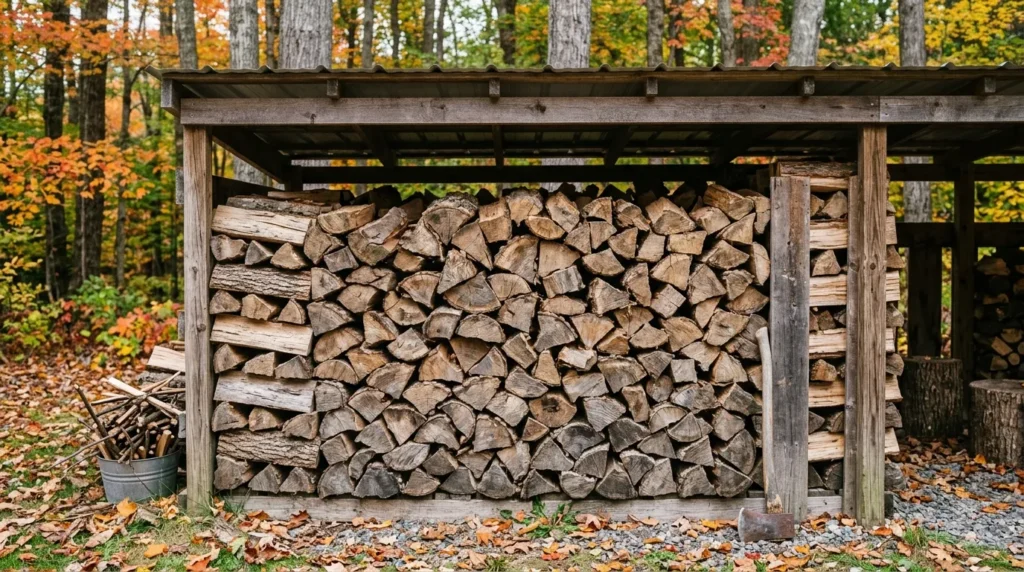
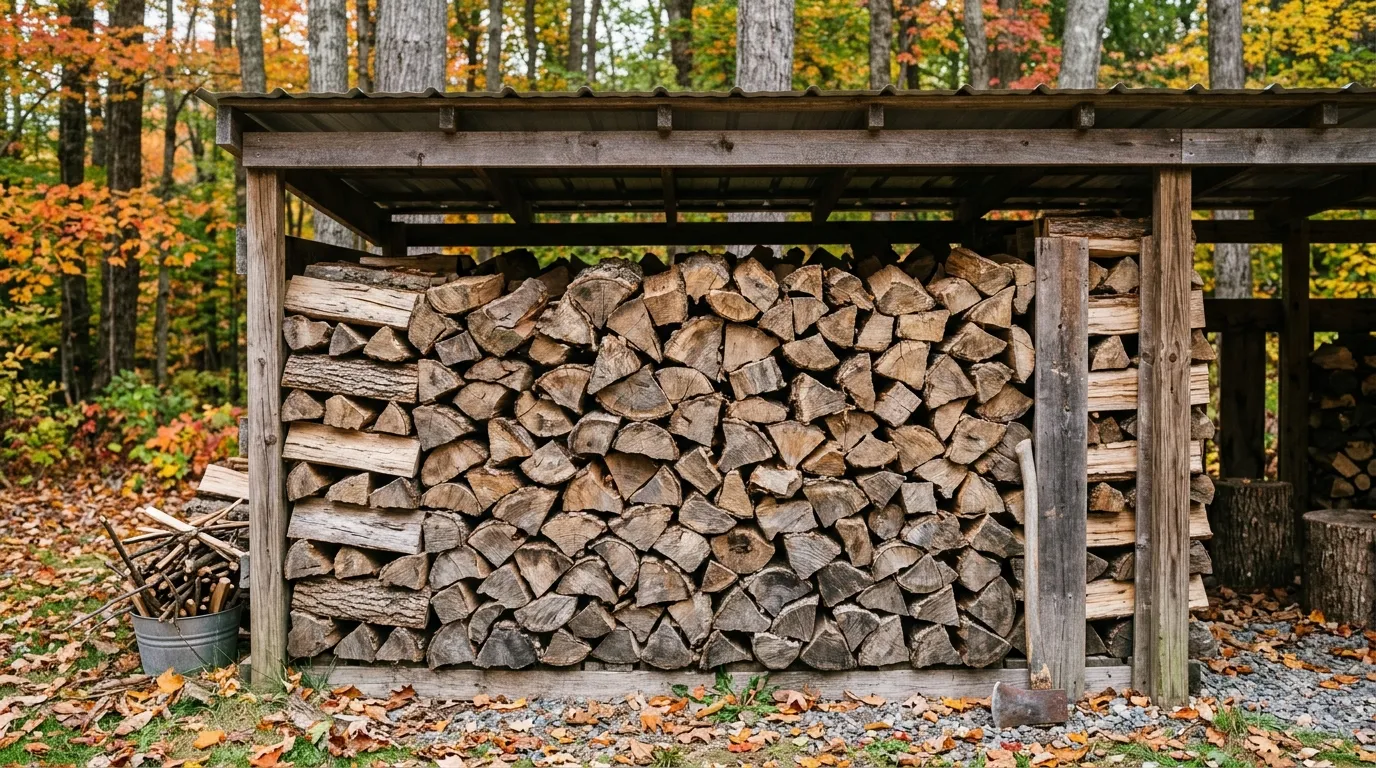
One of the best ways to protect firewood from snow is to store it under a roof. A woodshed, covered storage area, carport, or other roofed structure helps block snowfall and keeps moisture away from the wood.
A roof also reduces the amount of snow that collects on top of the stack, making it easier to access firewood throughout winter.
Benefits:
- Protects wood from snow and rain.
- Reduces moisture absorption.
- Makes firewood easier to access during winter.
- Helps wood stay ready to burn.
2. Use a Waterproof Cover
If you do not have a woodshed, cover the top of the firewood stack with a waterproof tarp or firewood cover. The cover should protect the wood from snow while still allowing airflow.
The best approach is to cover only the top portion of the stack instead of wrapping the entire pile.
Benefits:
- Prevents snow accumulation.
- Protects against rain and ice.
- Helps keep the top layers dry.
- Extends the usability of stored firewood.
3. Keep Wood Off the Ground
Firewood placed directly on snow, soil, or grass can absorb moisture from below. As snow melts, the bottom logs often become wet and may begin to rot over time.
Use pallets, firewood racks, concrete blocks, or other raised platforms to lift the wood off the ground.
Benefits:
- Reduces ground moisture.
- Improves airflow beneath the stack.
- Helps prevent mold and rot.
- Keeps the bottom logs dry.
4. Leave Space for Airflow
Good airflow helps moisture evaporate from firewood. Even during winter, moving air can reduce dampness and improve drying.
Leave some space between rows and avoid stacking wood tightly against walls or fences.
Benefits:
- Helps remove trapped moisture.
- Supports faster drying.
- Reduces mold growth.
- Improves overall wood quality.
5. Stack Logs Loosely
A tightly packed firewood pile can trap moisture and reduce ventilation. Proper stacking allows air to circulate through the logs.
Arrange the wood neatly while leaving enough gaps for air movement.
Benefits:
- Improves airflow.
- Speeds up drying.
- Reduces moisture buildup.
- Makes the stack more stable.
6. Keep Snow Away From the Stack
Snow that sits against the sides of a firewood pile can melt and soak into the logs. During heavy snowfall, regularly clear snow away from the stack.
A simple snow shovel can help keep the surrounding area clean and dry.
Benefits:
- Prevents melting snow from soaking logs.
- Improves access to firewood.
- Reduces ice buildup.
- Helps maintain dry storage conditions.
7. Avoid Covering the Sides Completely
Many people make the mistake of wrapping the entire firewood pile with plastic. While this blocks snow, it also traps moisture inside the stack.
Allow the sides to remain open whenever possible so air can circulate freely.
Benefits:
- Prevents moisture from becoming trapped.
- Improves ventilation.
- Reduces mold growth.
- Supports natural drying.
8. Choose a Sheltered Storage Spot
The location of your firewood storage area matters. A sheltered spot can protect wood from strong winds, blowing snow, and excessive moisture.
Good locations include:
- Woodsheds
- Covered patios
- Garages with ventilation
- Side areas protected by buildings
Benefits:
- Reduces exposure to winter weather.
- Minimizes snow accumulation.
- Makes storage more convenient.
- Helps maintain dry firewood.
9. Remove Snow After Heavy Snowfall
After a snowstorm, remove snow from the top and sides of the firewood pile as soon as possible. The longer snow remains on the wood, the greater the chance it will melt and add moisture.
Regular maintenance can prevent many winter storage problems.
Benefits:
- Prevents water penetration.
- Reduces ice formation.
- Protects seasoned firewood.
- Keeps the stack cleaner.
10. Check Wood for Moisture Regularly
Even properly stored firewood can absorb moisture during long winters. Periodically inspect the logs for dampness, mold, or signs of water damage.
A moisture meter can provide a more accurate reading and help determine whether the wood is ready to burn.
Benefits:
- Identifies moisture problems early.
- Helps maintain burn quality.
- Reduces smoke production.
- Improves heating efficiency.
Common Mistakes to Avoid
Many homeowners accidentally expose firewood to excess moisture during winter. Avoid these common mistakes:
- Storing firewood directly on the ground.
- Wrapping the entire stack in plastic.
- Leaving wood uncovered during snowstorms.
- Stacking wood too tightly.
- Ignoring snow buildup around the pile.
- Storing wood in damp or poorly ventilated areas.
Quick Winter Firewood Storage Checklist
Before winter arrives, make sure you:
- Store firewood under a roof or cover.
- Raise wood off the ground.
- Leave space for airflow.
- Cover only the top of the stack.
- Remove snow after storms.
- Keep the storage area clean.
- Inspect wood regularly.
- Use seasoned firewood whenever possible.
- Keep extra dry wood near your home.
- Monitor moisture levels throughout winter.
Conclusion
Keeping firewood dry during snow requires proper storage, good airflow, and regular maintenance. Storing wood under a roof, using a waterproof cover, keeping logs off the ground, and removing snow after storms can help protect your firewood throughout winter. By following these simple tips, you can ensure your firewood stays dry, burns efficiently, and provides reliable heat during the coldest months of the year.
Also Read: Common Firewood Scams and How To Avoid Them